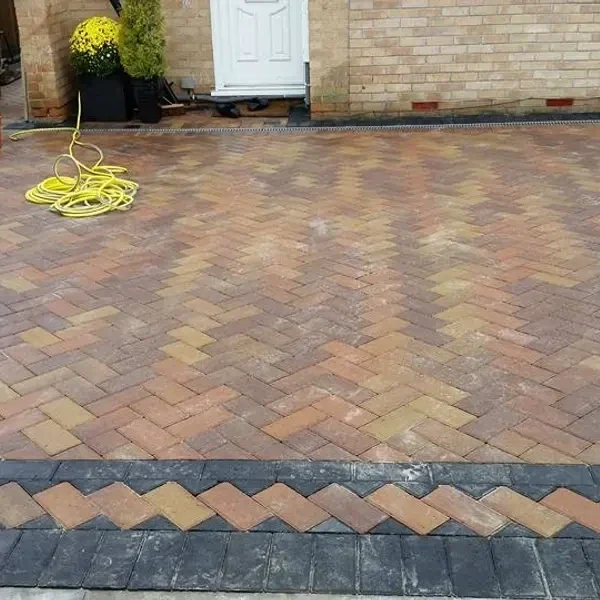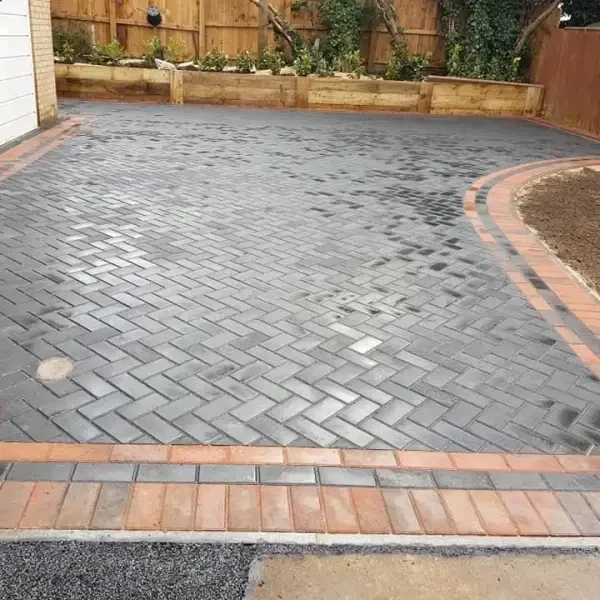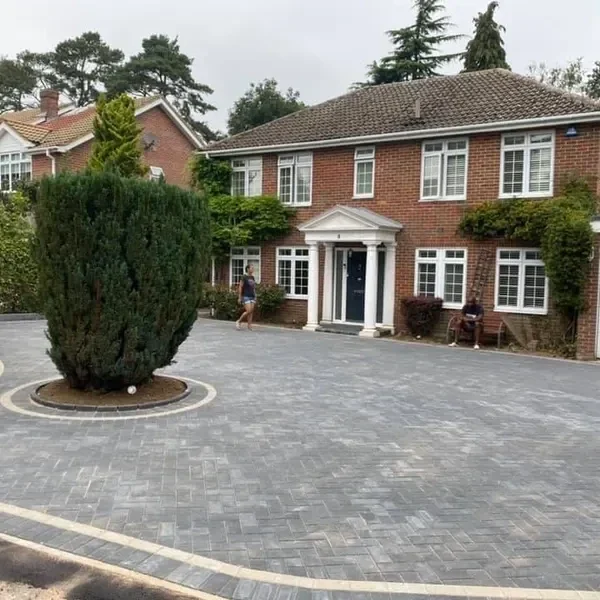
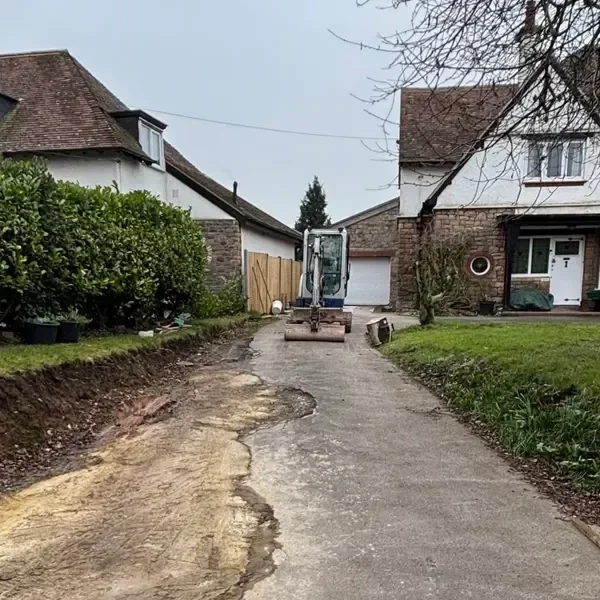
Sometimes an existing concrete base can be retained beneath block paving, but that does not make an overlay the default solution. The base, drainage, available depth and final levels all need checking. Covering a cracked or moving slab can simply transfer the old problem into a new surface.
Assess the existing slab properly
Look for movement, broken edges, deterioration and areas where water already collects. A surface that appears firm from above may have unknown thickness or support. The installer needs enough information to decide whether it can form part of a suitable construction.
There is an important distinction between a designed paving system over a sound base and placing a thin layer of material over whatever is already there. Ask for the proposed build-up and the reason it is appropriate. If the base cannot be assessed confidently, retaining it may create an avoidable uncertainty.
Check the height before the appearance
An overlay raises the surface unless material is removed elsewhere. That affects door thresholds, air bricks, damp-proofing details, gates and the meeting point with the pavement. A convenient-looking shortcut can become awkward where the driveway meets the house.
Rainwater needs a complete route. Conventional blocks above concrete do not become a fully infiltrating pavement just because there are joints between them. The bedding and supporting surface need a deliberate drainage arrangement, and any planning implications must be considered separately.
Compare the whole proposal
An overlay may be appropriate on one property and unsuitable next door. Existing condition, available levels and intended loading matter more than a universal yes or no. A contractor should be able to explain what is being retained and what evidence supports that decision.
Ask before agreeing: How is the old base being assessed? Where will water go beneath and above the blocks? What happens to the threshold and boundary levels? If these questions remain unanswered, the overlay proposal is not sufficiently developed.
Discuss your project
Planning block paving in Bristol or South Gloucestershire? Smart Paving can assess the layout, ground and drainage before helping you choose a finish. Arrange a site visit.
Explore our block paving service. See the block paving patterns and finishes guide.
Related reading
- What the driveway sub-base does—and why depth is site-specific
- Standard and permeable block paving: the difference is below the surface too
- Replacing an existing driveway: why the front-garden planning rule still matters