A shaded patio may remain damp longer and collect more leaves than an open sunny area. Material selection matters, but so do drainage, surrounding planting and maintenance access. No paving type removes the effects of a permanently sheltered environment.
Understand where the shade comes from
Observe the garden at different times and note the influence of buildings, fences and trees. A place that receives brief morning sun may behave differently from one in deep shade all day. Include the effect of overhanging planting and seasonal leaf fall.
Check whether water arrives from somewhere else. A leaking downpipe or soil washing from a bed can make one area wetter or dirtier than the rest. Replacing the paving without addressing that source may leave the same problem.
Choose the actual finish carefully
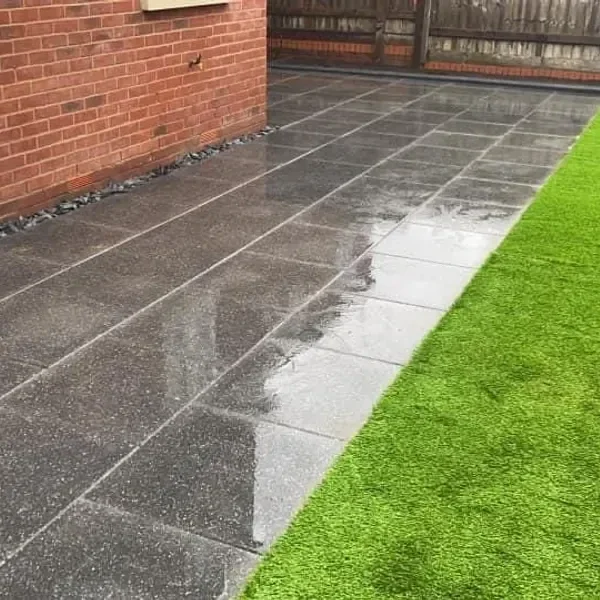
Compare outdoor products with appropriate performance information for the intended use. A broad description such as “stone” or “porcelain” does not establish how every finish behaves. Look at texture as well as colour and ask about care in a shaded location.
Pale paving may make green growth more noticeable, while a darker surface can produce a different appearance. Neither colour stops algae forming. Choose a finish you can maintain realistically rather than one described as permanently clean.
Make maintenance easy to carry out
Allow a clear route for sweeping and suitable cleaning. Avoid tiny inaccessible strips behind fixed furniture where leaves can accumulate. Keep borders contained and choose plants that do not continually spread debris across the walking line.
Follow the product's guidance for biological growth and cleaners. Stronger treatment is not automatically better, especially on sensitive stone or a particular jointing product.
Best first step: Identify shade, water sources and leaf collection before selecting new paving. A coordinated plan can make a shaded patio more usable, even though it will still need routine care.
Discuss your project
Planning a patio or path in the Bristol area? Smart Paving can review the layout, thresholds and drainage alongside your material choices. Arrange a site visit.
Explore our patios and paths service.
Related reading
- Cleaning sandstone patios: why the stone type matters
- Paving a narrow side passage: bins, drainage and access first
- Preparing a driveway for winter without using the wrong treatment