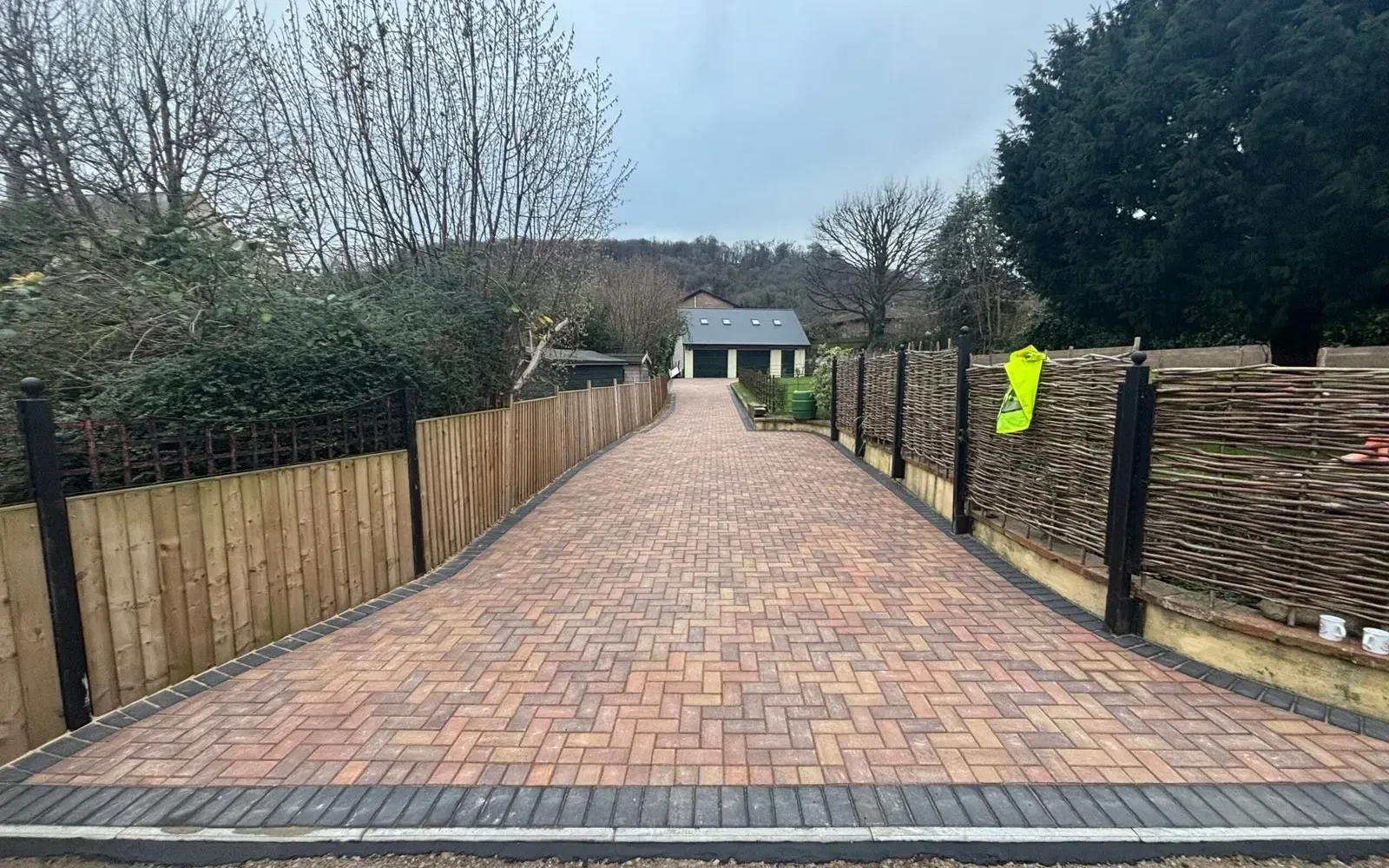
Mixed-size paving can create a relaxed appearance without using irregular natural stone. The different units are still part of a manufactured system, and their proportions usually determine the available laying arrangements. A successful layout feels balanced rather than accidentally assembled.
Check the intended pattern options
Ask which arrangements the chosen range supports. A mixture of square and rectangular units cannot always reproduce a pattern designed for a single rectangular block. Use the manufacturer's layout information as the starting point, then adapt the setting-out to the driveway.
The word “random” can be misleading. Repeated long joints, clusters of the largest units or isolated narrow strips can make an informal arrangement look unplanned. Agree the visual rules and view an adequately sized sample area before the whole field is laid.
Blend colour across the surface
Mixed colours and mixed sizes are separate choices. You can use varied sizes in a restrained colour, or a more regular pattern with a blended finish. Combining both strongly may be attractive on a broad area but busy on a compact frontage.
Discuss how packs will be blended where the product guidance calls for it. Assess the appearance from a normal viewing distance, not only while standing directly over individual blocks. Natural-looking variation should still feel reasonably distributed across the completed area.
Resolve the difficult junctions
Garage fronts, inspection covers and narrow side returns often reveal whether the layout has been planned. Aim for sensible cuts and a clear border rather than forcing the same visual arrangement into every tiny space.
The structural requirements remain unchanged: the product must suit vehicle use, the edge must restrain the paving and the base must support the loading. An informal appearance is not a reason to accept irregular levels or loose units.
Sample test: Look at several square metres if possible. One block from each size tells you little about the rhythm of the finished driveway.
Discuss your project
Planning block paving in Bristol or South Gloucestershire? Smart Paving can assess the layout, ground and drainage before helping you choose a finish. Arrange a site visit.
Explore our block paving service. See the block paving patterns and finishes guide.
Related reading
- Tumbled or straight-edged block paving for a Bristol home?
- 45° or 90° herringbone: which way should driveway blocks run?
- Marshalls Tegula, Tobermore Sienna and Brett Alpha Flow: compare the right details