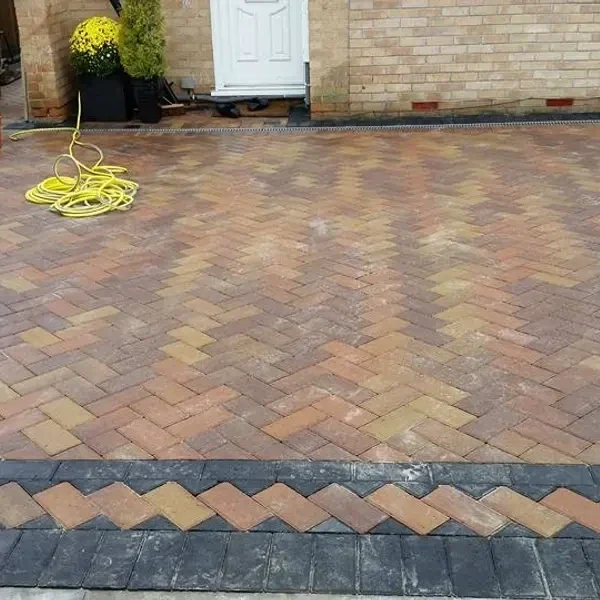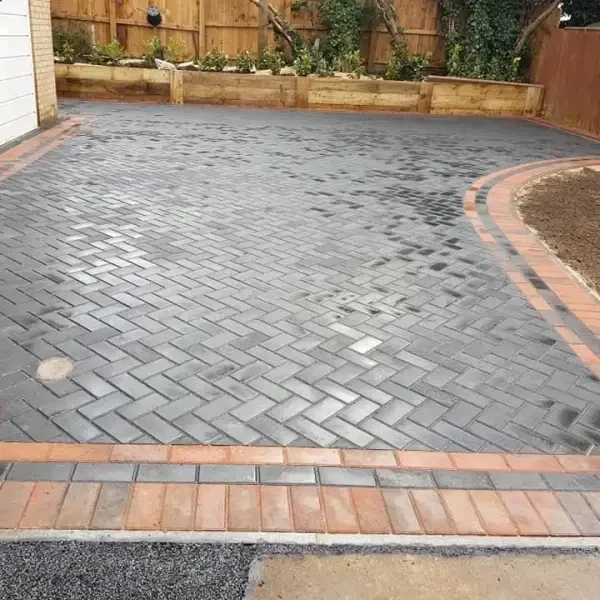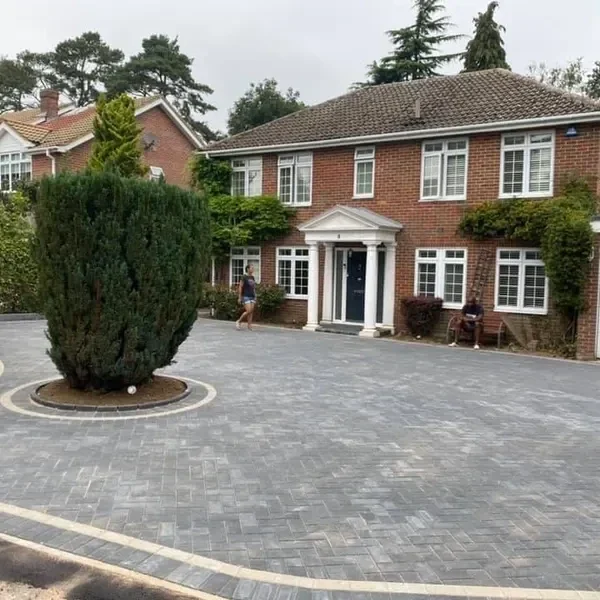
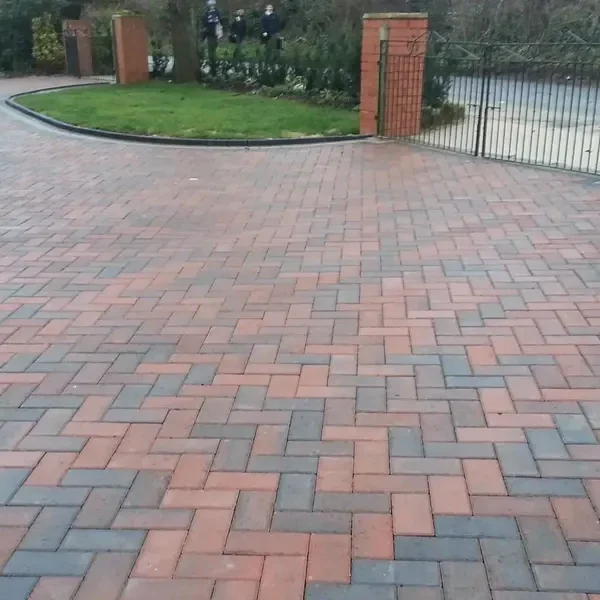
A narrow driveway benefits from a calm layout and careful use of its width. An elaborate pattern does not create more parking space, and a wide decorative border can make the usable field look smaller. Start with the car, the walking route and the entrance, then choose the paving arrangement.
Measure everyday movement
Park the vehicle where it will normally sit and check door opening, access to the boot and the path to the front door. Include bins, bicycle access and any gate. A plan based only on the vehicle's body width misses much of what happens around it.
Keep a clear pedestrian route where possible. A subtle change in border or direction can help define it, but avoid introducing a lip that creates a trip point. The layout should make the space easier to use in poor light and wet weather.
Keep the pattern readable
A uniform field with a restrained border often feels less crowded than several inlays. Compare herringbone orientations on a drawing of the actual driveway. Neither orientation guarantees that a narrow space will appear wider; the surrounding walls, colour and viewing direction influence the result.
Watch where cuts fall beside long walls. Repeated narrow strips can look untidy and create fragile details. Adjusting the setting-out early is preferable to accepting awkward cuts once most of the paving is down.
Consider colour and planting together
A mid-tone field can provide definition without the heaviness of an entirely dark surface. If planting is retained, choose a simple edge that prevents soil spreading onto the paving. Do not sacrifice every green strip merely to make the pattern symmetrical.
For a long approach, a clear entrance detail may provide enough visual interest. The rest of the driveway can remain simple, practical and easy to maintain.
Before deciding: Compare layouts with a parked car drawn in. The design still needs to make sense when much of the paving is covered.
Discuss your project
Planning block paving in Bristol or South Gloucestershire? Smart Paving can assess the layout, ground and drainage before helping you choose a finish. Arrange a site visit.
Explore our block paving service. See the block paving patterns and finishes guide.
Related reading
- 45° or 90° herringbone: which way should driveway blocks run?
- Mixed-size block paving: getting an informal pattern that still looks tidy
- A front garden with parking and planting: start with the space you actually use